






You know that feeling when the heating is on, the thermostat says 19°C or 20°C, yet your living room still feels cold? You put on a pair of socks, make another cup of tea and wonder whether the boiler is actually doing its job.
Sometimes, the problem is not the air temperature at all. Look down at the floor.
A tiled kitchen, bare wooden floor or laminate flooring can feel noticeably cold during a British winter, particularly in older homes. Add a rug to the same room, and suddenly it feels more comfortable. The thermostat hasn't moved, and the central heating is still doing exactly what it was doing before, but your experience of the room has changed.
So, do rugs make a room warmer, or do they simply make it feel warmer?
The answer is a little more interesting than either a simple yes or no.
Do Rugs Make a Room Warmer?

Rugs do not work like heaters, so they will not significantly raise a room's air temperature. They can make a room feel warmer by creating a softer, less heat-conductive surface between your feet and a cold floor. This is particularly noticeable on tile, stone, concrete, laminate and wooden flooring. Rugs can improve underfoot comfort, but they should not replace proper floor insulation or draught-proofing.
Your Thermostat Measures the Air, Not How the Floor Feels
One reason this can seem confusing is that we often use the thermostat to decide whether a room is warm.
If it says 20°C, we assume the whole room should feel equally warm. In reality, air temperature is only one factor in how comfortable you feel.
Think about walking barefoot from a carpeted bedroom onto a tiled bathroom floor first thing in the morning. Both spaces might be at a similar air temperature, but the tiles feel much colder.
That difference is not your imagination.
When your bare feet touch a colder material, heat moves away from your skin into that surface. Hard flooring materials such as stone and ceramic tile can feel particularly cold because they conduct heat away from your feet more readily than a textile surface.
A rug changes the surface you touch. Instead of placing your feet directly onto a hard, cold floor, you step onto a layer of fibres that feels softer and reduces the rate at which heat leaves your feet.
That is why a rug can make the room feel warmer even when the thermometer reads the same temperature.
Why Does a Cold Floor Feel Colder Than Cold Air?
A simple everyday example makes this easier to understand.
Imagine two objects sitting in the same room: a wooden table and a metal spoon. Both have been in the room for several hours, so they are roughly at the same temperature as the surrounding air. When you touch the spoon, it usually feels colder.
The spoon doesn't necessarily have a lower temperature. It simply transfers heat away from your hand more efficiently.
Your floor works similarly.
A bare floor can draw heat away from your feet much faster than a soft rug. This is especially noticeable when you are barefoot or wearing thin socks.
That is also why a rug's effect is often strongest where people actually stand or walk. You may not notice a dramatic difference in the air around a rug, but you can immediately notice the difference when stepping onto it.
Energy Saving Trust makes a similar practical distinction in its guidance for keeping homes warm. Rugs and carpets can help your feet feel warmer, potentially reducing how often you feel the need to turn the heating on, while proper floor insulation helps prevent heat from escaping through the floor.
A Rug Can Change Comfort Without Changing the Temperature
This is the most important distinction to keep in mind when asking, "Can rugs make a room warmer?"
There are really two different questions:
|
What you are asking |
What a rug can do |
|
Can a rug heat the air? |
Not in the way a radiator or heater does |
|
Can a rug make a cold floor feel warmer? |
Yes |
|
Can a rug improve underfoot comfort? |
Yes |
|
Can a rug add some resistance to heat moving through the floor covering? |
Yes |
|
Can a rug replace proper floor insulation? |
No |
|
Can a rug help a room feel cosier in winter? |
Yes |
This is why saying that rugs "heat a room" can be misleading.
A rug is not producing heat. It changes the surface beneath you and, to a degree, how readily heat moves through that floor covering.
That small distinction matters because it explains why the same 19°C room can feel completely different depending on what is underneath your feet.
Why Some UK Floors Feel Particularly Cold

The flooring underneath your rug makes a noticeable difference in how much you appreciate it.
Tile and stone flooring
Bathrooms, kitchens, hallways and some older properties often have tiled or stone floors. These surfaces can feel especially cold under bare feet during winter.
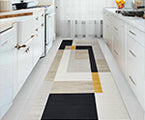
A rug or runner gives you a warmer-feeling surface to stand on without heating the entire floor.
Laminate and engineered flooring
Laminate can look warm and inviting, but its surface can still feel chilly in colder weather, especially when the room has few soft furnishings.
A rug can break up a large expanse of hard flooring and provide a more comfortable area beneath a sofa, coffee table or bed.
Solid wooden floors
Wood does not necessarily feel as cold as tile, but an uncarpeted wooden floor can still feel uncomfortable in winter. This is particularly true in older homes where suspended timber floors may have gaps or limited insulation.
Energy Saving Trust notes that suspended timber floors are common in Victorian and Edwardian properties, and that floor insulation can help reduce heat loss through these structures.
Concrete floors
Concrete is common in many newer homes and flats. Where the floor is insufficiently insulated, it can contribute to a cold feeling at floor level.
A rug can improve the immediate experience underfoot, but it does not solve the underlying insulation problem.
Does a Thicker Rug Always Mean More Warmth?
Not necessarily.
A thick rug can feel warmer and softer because more material sits between your feet and the floor. Deep or shaggy piles can be particularly pleasant in bedrooms and relaxed living spaces where people often walk barefoot or sit on the floor.
But thickness is not the only thing that matters.
An extremely thick rug may be impractical under doors, around furniture, or in high-traffic areas. In a hallway, for example, a lower pile may be more sensible even if your main priority is comfort.
The important question is not simply, "What is the thickest rug I can buy?"
Instead, ask:
Where do I actually need the floor to feel warmer?
If the answer is beside the bed, a bedroom rug that gives you a soft landing in the morning may make far more difference to everyday comfort than covering a large area of floor that you rarely use.
For more ideas on positioning rugs around beds, see RugsPile's Bedroom Rug Ideas Guide.
Where Can a Rug Make the Biggest Difference?

You don't need to cover the entire floor to notice the benefit.
Beside the bed
Bedrooms are one of the easiest places to notice the difference. Nobody enjoys stepping from a warm bed straight onto a freezing floor on a January morning.
A rug positioned beneath or around the bed creates a softer surface for your feet.
Around the sofa
If you spend most evenings sitting in the same part of the living room, place the rug where your feet actually reach the floor.
A rug underneath the coffee table, extending towards the sofa, can create a comfortable zone without covering the entire room.
RugsPile's Living Room Rug Ideas Guide covers practical placement around sofas and seating areas.
Along a hallway
Hallways can have some of the most uncomfortable hard flooring in a home because you walk through them constantly. A runner provides a softer path and protects the floor from everyday traffic.
In a reading or seating corner
A smaller rug can work well beneath an armchair or reading chair. This is a good option when you want the comfort of a rug without committing to a large floor covering.
Do You Need a Large Rug to Keep a Room Warm?
No.
A larger rug covers more floor, but bigger does not automatically mean warmer.
The best size depends on how you use the room and where people spend time. If your main complaint is cold feet while sitting on the sofa, prioritise the seating area. If the bedroom floor feels icy when you get out of bed, prioritise the area around the bed.
Of course, size still matters for the room's overall appearance. A tiny rug floating in the middle of a large lounge may not provide enough useful coverage and can look disconnected from the furniture.
Before buying, measure the furniture layout and the floor. RugsPile's rug size guide can help when deciding how much floor to cover.
What About Wool, Shaggy and Synthetic Rugs?
A rug's material and construction affect how it feels underfoot.
Wool rugs
Wool is naturally insulating and feels comfortable and resilient. It's a good choice when you want a rug that feels substantial and works year-round.
Shaggy rugs
Shaggy rugs are particularly noticeable under bare feet because their deeper pile creates a soft, cushioned surface.
For example, the Tie Dye Fluffy Shaggy Rug has a 450 GSM polyester pile and is designed for bedrooms, living rooms, and other everyday spaces where a soft underfoot feel is useful.
Synthetic rugs
Polyester and other synthetic fibres can offer a practical combination of softness, durability and easy maintenance. They are often useful in busy homes where the rug needs to cope with regular foot traffic.
Rather than choosing a material purely because it is marketed as "warm", consider the complete picture: pile, construction, room, maintenance requirements and how you actually use the space.
Does Rug Underlay Make a Difference?
It can.
Underlay adds another layer between the rug and the floor. Depending on the type used, it can improve cushioning, help the rug stay in place and add another degree of separation from the hard surface underneath.
This can be particularly useful on hard floors, where the difference between a thin rug placed directly on the floor and one with a suitable underlay can be noticeable underfoot.
However, choose an underlay suited to the specific rug and flooring. Check compatibility, especially with delicate flooring, heated floors or materials that may react to rubber-backed products.
If you are renting, it is also worth considering protecting the floor beneath. Rugs can be a practical way to make a rented home more comfortable without making permanent changes. RugsPile's rental home rug guide covers some of these considerations.
Can a Rug Replace Floor Insulation?
No, and this is where it is important not to expect too much from a rug.
If your ground floor is genuinely losing a lot of heat, adding a rug is not the same as insulating the floor structure.
Proper floor insulation reduces heat loss through the floor by adding an insulating layer between the home and the ground. Energy Saving Trust's current floor insulation guidance explains that this can make rooms warmer and more comfortable while reducing heat loss.
A rug is better thought of as a comfort measure.
It can make the surface you live on feel better, especially where cold flooring affects your everyday comfort. But if a room remains unusually cold despite normal heating, it is worth looking beyond the rug.
You may have a draught, poor insulation, gaps around the floor or another issue that needs addressing.
What If the Problem Is Draughts?
Sometimes what feels like a "cold floor" is actually a draught at floor level.
This is particularly relevant in older properties. Cold air entering through gaps around floors, skirting boards, doors or windows can create an uncomfortable chill around your feet.
Energy Saving Trust explains that draughts often make people feel cold because cold air can enter at floor level.
A rug can make the surface more comfortable, but it cannot seal a draught coming through a gap underneath the floor.
If you can feel cold air moving around your feet even when the heating is on, investigate the source rather than simply adding a thicker rug.
If your home needs draught-proofing or insulation work, make sure you consider ventilation too. Blocking every possible gap is not always the right approach because homes still need adequate ventilation.
What About Homes With Underfloor Heating?
This is one situation where you should think carefully before choosing a very thick rug.
With underfloor heating, heat needs to move from the heating system through the floor covering and into the room. A thick rug and underlay can slow that transfer.
Energy Saving Trust confirms that rugs and carpets can be used with underfloor heating, but they can make a room take longer to heat because they reduce how quickly heat transfers into the room. It recommends checking the tog rating of the carpet and underlay and following the system requirements.
So, if you have underfloor heating, don't automatically choose the thickest rug available just because you want a warmer-feeling floor.
Your heating system changes the calculation.
A Better Way to Choose a Rug for Winter
Instead of searching only for the "warmest rug", start with the problem you are trying to solve.
If your feet are cold, think about where they touch the floor.
If the whole room feels chilly, consider whether the issue is actually poor insulation or draughts.
If the room feels bare and uncomfortable despite being adequately heated, a rug can add a softer surface and make the space feel more inviting.
If you have underfloor heating, check compatibility before choosing a thick pile.
If you are working with a small room, don't assume you need to cover every inch of floor. A well-placed rug can be more useful than an oversized one that ends up hidden underneath furniture.
Five Things to Consider Before Buying a Rug for a Cold Room
1. Identify the cold spot.
Is it beside the bed, under the sofa, in front of the sink or along the hallway? Start there.
2. Check your flooring.
Tile, stone, laminate, timber and concrete can all behave differently underfoot.
3. Think about pile height.
A deeper pile can feel softer, but it is not automatically the best choice for every room.
4. Consider underlay.
A suitable underlay can add cushioning and provide an extra layer between you and the floor.
5. Look for the real cause of the cold.
If the room itself is losing heat or has noticeable draughts, a rug is only part of the solution.
So, Can Rugs Really Make a Room Feel Warmer?
Yes, but the wording matters.
A rug does not suddenly increase the temperature shown on your thermostat. What it changes is the surface beneath you and, therefore, how your body experiences the room.
That difference can be surprisingly noticeable.
The effect is easiest to appreciate when you move between bare flooring and a rug. Step onto a cold tiled floor in socks, and you immediately notice the chill. Step onto a soft rug and the same room can feel considerably more comfortable.
That is why rugs are particularly useful in bedrooms, living rooms, hallways and other areas where cold hard flooring affects everyday comfort.
They can also complement proper home improvements. If you need floor insulation or draught-proofing, those measures address heat loss at the source. A rug then becomes the finishing layer that makes the floor more pleasant to live with.
FAQs
Do rugs make a room warmer?
Rugs can make a room feel warmer and more comfortable, especially by reducing the heat your feet lose to a cold floor. They do not produce heat like a radiator, so their effect on the room's actual air temperature is limited.
Do rugs insulate floors?
Rugs provide some thermal resistance by adding a textile layer over the floor, but they should not replace proper floor insulation. Floor insulation is designed to reduce heat loss through the floor structure.
Do thick rugs make a room warmer?
Thicker rugs can feel warmer and softer underfoot, particularly when walking barefoot. However, thickness isn't the only factor. The rug's material, construction, placement and the type of flooring underneath all affect how useful it will be.
What are the best rugs for cold floors?
The best rug for a cold floor provides comfortable coverage where you actually walk or sit. Thick-pile and shaggy rugs can feel especially comfortable underfoot, while practical lower-pile designs may work better in busy areas such as hallways and kitchens.
Can rugs reduce heat loss?
A rug can add a layer over the floor and may reduce heat transfer through the floor covering, but it is not a substitute for floor insulation. If significant heat is escaping through a ground floor, proper insulation is a more effective long-term solution.
Do rugs help keep heat in?
They can help insulate the floor surface, but the main benefit for most people is improved underfoot comfort rather than a major change in room temperature.
Are rugs good for cold wooden floors?
Yes. A rug can make bare wooden flooring feel softer and more comfortable, particularly in bedrooms and living areas. If the floor is unusually cold because of draughts or poor insulation underneath, however, you may need to address the underlying issue.
Can I use a rug with underfloor heating?
Usually, yes, but check the heating system and the rug manufacturer's guidance. Rugs and underlay can slow heat transfer from an underfloor heating system into the room, so the total tog rating and the floor covering's suitability matter.
Is a rug better than turning up the heating?
They solve different problems. A rug can improve underfoot comfort without using extra energy, while heating raises the room temperature. If the room is adequately heated but the floor feels cold, a rug may improve comfort without changing the thermostat.
Why does my floor feel cold even when the heating is on?
Cold flooring can remain uncomfortable even when the room air is warm. The flooring may conduct heat away from your feet, or there may be draughts or inadequate floor insulation. A rug can improve surface comfort, but you may need insulation or draught-proofing to address the underlying cause.
Final Thoughts
So, do rugs make a room warmer?
Not in the same way as turning up the heating, which is why the answer can be confusing.
Rugs can make rooms feel warmer by reducing direct contact with cold flooring and providing a softer, less heat-conductive surface underfoot. The difference can be especially welcome during a UK winter, when tiled bathrooms, wooden floors and uncarpeted bedrooms can feel noticeably chilly.
The best approach is to think about comfort and heat loss separately. Use a rug to improve the surface you live on, but look into insulation and draughts if the room itself struggles to stay warm.
Sometimes, making a room feel warmer does not require changing the thermostat at all. It starts with changing what is beneath your feet.