




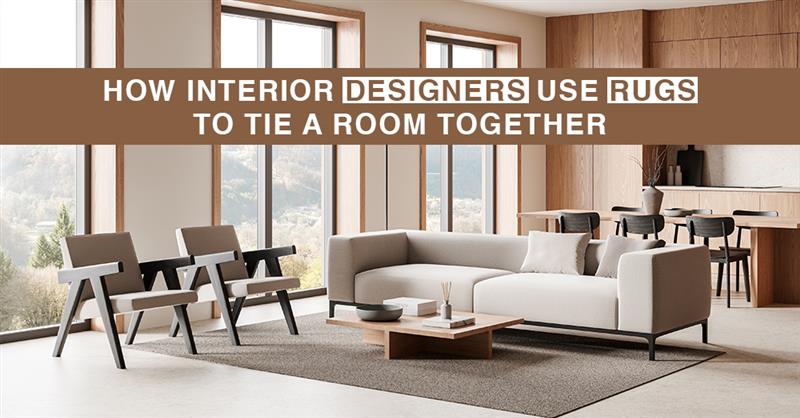
Interior designers use rugs to create harmony, warmth, & visual rhythm in a space. Beyond their practical role, these floor coverings ground furniture, define zones within open-plan layouts, & introduce layers of texture & colour that make a room feel beautifully complete.
The Art of Grounding a Room
Walk into a well-designed home & you'll sense cohesion before you notice the details. The colours speak to one another, the furniture feels anchored, & there's a quiet rhythm connecting every piece. That seamless quality, the difference between a good room & a great one, often begins underfoot.
Designers speak of rugs as "visual anchors." They ground a space, quite literally, but they also draw the eye & set the mood. In a Georgian townhouse in Bath, a handwoven wool piece in muted greys & blues might echo the stone floors & period character; meanwhile, in a London apartment with modern furnishings, a sculptural geometric design could lend structure & vibrancy to an otherwise neutral palette.
From penthouses to country cottages, rugs are the quiet foundation upon which harmony rests.
The Psychology of Connection
A beautifully placed floor covering does more than please the eye. Designers know it influences how we feel. Bare floors can leave a room feeling echoey & emotionally cold, as much as physically. Add a tactile layer, & suddenly there's a sense of comfort & belonging.
Interior designers often describe this transformation as "emotional warmth." It's the reason we instinctively gather around the softest spot in the room. Children play there, pets curl up there, & guests gravitate to it. Rugs make us feel at home in the truest sense.
Drawing the Line: Defining Space Without Walls
Open-plan living has become the heart of modern British design. It's light, social, & adaptable, but it can also be tricky to structure. Enter the designer's secret weapon: the rug.
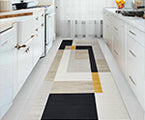
A single, well-proportioned piece can define distinct zones within a shared area. A large flatweave beneath a dining table carves out a sense of occasion. A deeper pile under a sectional sofa softens the transition between the kitchen & lounge. Even a slim runner in a hallway draws the eye forward, linking one space to the next.
In interiors where walls no longer divide, texture & proportion do the work instead.
The Language of Colour & Pattern
Designers often begin their schemes with the floor. "It's like choosing the right punctuation," says one London-based interior stylist. "The rug sets the rhythm for everything else."
Colour plays a crucial part. In the soft, changeable light of British homes, muted hues tend to work best. Shades inspired by the natural landscape, heather, slate, moss, & sand complement both traditional & modern settings. For those craving drama, designers might introduce richer tones, such as terracotta or indigo, used sparingly so the room still feels breathable.
Patterns, meanwhile, carry cultural & historical resonance. A Persian-inspired motif can lend heritage to a new-build home, while abstract geometrics or organic brushstroke designs suit a contemporary sensibility. The art lies in choosing patterns that echo the space's character rather than overpower it.
Texture: The Quiet Luxury
While colour attracts attention, texture holds it. Designers often layer materials to create depth & tactility, a practice rooted in British comfort & craftsmanship.
In a modern living room with hard flooring, a thick wool pile absorbs sound & softens the atmosphere. In a cottage kitchen, a rustic jute or sisal underfoot introduces natural contrast. Layering has also become a signature look: placing a smaller decorative piece atop a plain base adds richness without clutter.
This balance of smooth & tactile, polished & imperfect, is what gives rooms their lived-in elegance.
Proportion, Placement, & the "Front-Legs Rule"
Even the most beautiful rug can look wrong if it's poorly sized. Interior designers spend considerable time perfecting the proportion & unspoken geometry of a room.
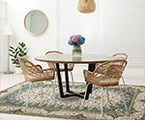
The rule of thumb? The floor covering should anchor the furniture rather than float beneath it. In seating areas, that often means placing the front legs of sofas & chairs on the rug, ensuring connection without crowding. For dining spaces, the piece should extend comfortably beyond the chairs, allowing movement without disruption.
Scale is equally crucial. Too small & the rug feels lost; too large & it overwhelms. Designers balance negative space & coverage to make a room feel effortless yet intentional.
A Seasonal Story: Rugs Through the British Year
The British home evolves with the seasons, & interior designers often treat rugs as part of that rhythm.
In spring & summer, lighter cotton or jute weaves echo the airiness of longer days. Their natural tones & breathable textures reflect sunlight, bringing a sense of freshness. Come autumn, richer weaves in wool or deep pile make their appearance, tactile layers that trap warmth & add visual weight as daylight fades.
Some homeowners even rotate their floor coverings as part of their seasonal refresh, a simple gesture that mirrors nature's own changes & keeps interiors feeling alive.
Balancing Old & New
One of the great joys of British design is its mix of heritage & innovation. Designers love playing with this tension, & rugs offer the perfect bridge between eras.
In an Edwardian house with ornate fireplaces & high ceilings, a sleek, monochrome design can modernise the space without losing its soul. Conversely, in a contemporary glass extension, a traditional hand-knotted piece adds texture & storytelling, grounding the modern architecture in craftsmanship & history.
It's this conversation between past & present that gives UK interiors their distinctive charm.
How Designers Source & Curate
Behind every beautifully styled room lies a story of curation. Designers don't simply "pick a rug"; they select it with the precision of an art collector.
Many look for authentic handwoven pieces from skilled makers, natural dyes, & sustainable fibres. Others prioritise practicality: easy-clean materials for family homes or hypoallergenic weaves for sensitive households.
At RugsPile, these values resonate deeply. The focus is always on quality & longevity, selecting floor coverings that not only complement a design scheme but also endure through years of real life.
Case Study: A London Loft
Take, for example, a recent project in Shoreditch. The brief: Transform a minimalist loft into a warm and welcoming home for a young couple. The space featured exposed brick, steel beams, & polished concrete floors, but it was stark.
The designer introduced two oversized wool rugs: one in the living area with an organic, cloud-like pattern; another in the bedroom, soft & neutral. These tactile layers broke up the hard surfaces, softened acoustics, & established visual order.
The result? The space still felt industrial, but now it also felt lived in, proof of how the right rug can balance architecture & emotion in a single stroke.
Sustainability & Craftsmanship
Today's homeowners are increasingly mindful of sustainability, a value interior designers share. Natural fibres such as wool, jute, & cotton remain the preferred choice for both aesthetic & ethical reasons. They're renewable, durable, & biodegradable.
Equally important is craftsmanship. Handwoven pieces often carry subtle irregularities, the kind that give a space soul. "Perfection can feel sterile," one designer notes. "Texture tells a story."
British consumers are also embracing local artistry, seeking out homegrown makers who blend contemporary design with traditional weaving techniques. This movement has made quality craftsmanship not just a luxury but a lifestyle statement.
Common Design Challenges & Solutions
Even experienced homeowners face design dilemmas when choosing floor coverings. Interior designers often address the following:
- Room feels disjointed: Use a rug to link colours or patterns from existing furnishings.
- Space lacks warmth: Introduce texture through wool or shag piles.
- Small room syndrome: Choose lighter tones & minimal patterns to expand the visual field.
- Echoes & acoustics: Layer rugs over hard floors to absorb sound & create a sense of intimacy.
- Open-plan confusion: Use multiple coordinated pieces to define functional zones.
Designers approach these issues not as obstacles, but as opportunities to refine balance & atmosphere.
FAQs
How do designers decide where to place a rug?
Placement depends on how the space functions. In living areas, rugs should anchor seating; in dining spaces, they frame the table; & in bedrooms, they soften the edges of the bed.
Can mixing patterns work?
Yes, if balanced. Designers often pair one bold motif with a quieter, complementary one. The key is scale & contrast.
Are rugs practical for family homes?
Absolutely. Many modern designs use durable, easy-clean fibres suited to busy households & pets.
Do colours affect mood?
They do. Earthy neutrals calm, while rich hues energise. Designers use colour psychology to subtly influence ambience.
The Essence of Cohesion
At its core, interior design is storytelling, & every story needs structure. Rugs provide that grounding element, both physically & visually. They connect one piece of furniture to another, one colour to the next, one moment to the next.
When designers speak of "tying a room together," they mean creating a sense of wholeness & belonging. A room without a rug can look fine, but a room with the right carpet feels right.
It's the quiet confidence beneath the chaos, the whisper that turns design into comfort.
Love vintage interiors? 1950s design trends continue to inspire many modern homes.
Explore our detailed 1950s interior design guide to see how mid-century colours, furniture and rugs work beautifully together.
It’s ideal if you are planning a warm and stylish retro living room
Final Reflection
For interior designers across the UK, rugs are not accessories; they're architectural, emotional, & artistic tools. They anchor, soften, & elevate. They translate a collection of objects into a living, breathing environment.
Whether it's a h&woven wool piece in a Cotswolds cottage or a sleek modern runner in a city flat, these textiles hold the power to unify space & soul.
In the end, a rug is never just something you walk on; it's something you live with. It's where daily life unfolds, where warmth begins, & where design finds its balance.