






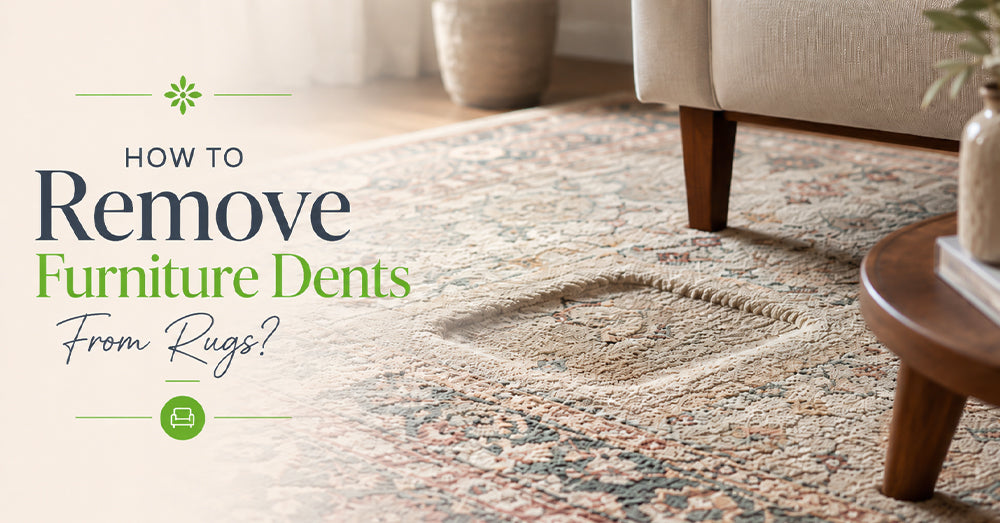
Rearranging your furniture can give your home a fresh new look, but it often leaves unsightly dents in your rug. Heavy sofas, coffee tables, beds and wardrobes can flatten rug fibres over time, making even a well-maintained rug appear worn. The good news is that these marks are usually temporary and can often be removed with the right care.
Whether you have a polyester, wool, polypropylene or shaggy rug, using the correct method can help restore its appearance without causing damage. In this guide, we’ll show you how to remove furniture dents, avoid common mistakes and keep your rug looking its best for years.
Furniture dents usually aren’t permanent. They happen because the weight of furniture compresses the rug’s pile over time. Most dents can be improved by gently restoring moisture and lifting the fibres using methods such as ice cubes, light steam, careful brushing and vacuuming. The best approach depends on the rug’s material, pile height and how long the furniture has remained in one position.
Why Do Furniture Dents Happen?
Before trying to remove a dent, it helps to understand why it appears in the first place.
Every rug is made from thousands of fibres twisted, woven or tufted together to create a soft surface. These fibres naturally stand upright, giving the rug its texture, comfort and appearance. When heavy furniture sits on the same spot for a long period, the fibres become compressed under constant pressure. Instead of springing back after someone walks across them, they remain flattened because they haven’t had the opportunity to recover.
Think about bending the bristles of a new paintbrush. If you press them down for a few seconds, they bounce back almost immediately. Leave something heavy resting on them for several months, and they begin to lose their original shape. Rug fibres behave similarly.
However, not every rug responds in the same manner. A dense wool rug often has excellent natural resilience and can recover remarkably well, while a synthetic rug may need a little more encouragement. High-pile rugs usually show deeper indentations simply because they have longer fibres, whereas low-pile rugs tend to hide dents more effectively.
The amount of weight also makes a difference. A lightweight side table might leave only a faint impression, but a solid oak wardrobe or a large corner sofa can create much deeper compression, particularly if it hasn’t been moved for years.
Understanding these factors makes it much easier to choose the right recovery method rather than reaching straight for harsh cleaning products that won’t solve the problem.
Are Furniture Dents Permanent?

One of the biggest misconceptions is that a dent automatically means the rug is damaged beyond repair.
In reality, most furniture dents are temporary. What you’re seeing is compressed pile rather than worn-out fibres. As long as the fibres remain intact, there’s a good chance they’ll regain much of their original shape with the right care.
Several factors influence how well a rug recovers.
|
Factor |
Effect on Recovery |
|
Furniture weight |
Heavier furniture creates deeper dents. |
|
Time |
The longer furniture stays in one place, the longer recovery usually takes. |
|
Rug material |
Wool often recovers better than many synthetic fibres. |
|
Pile height |
High-pile rugs show dents more clearly but can often regain their shape well. |
|
Rug age |
Newer rugs generally recover faster than older rugs with worn fibres. |
If the fibres have become brittle over time or from years of heavy foot traffic, complete recovery may not always be possible. In those cases, the dent is no longer simply compressed pile but genuine wear.
Fortunately, that’s less common than many people think. Most household rugs respond well to simple restoration techniques without needing professional repair.
Does Every Rug Recover in the Same Way?
This is where many online guides oversimplify the advice.
You’ll often see articles recommending one method for every rug, but that’s rarely the best approach. The material, construction and pile height all affect how the fibres respond to moisture, heat and brushing.
Wool Rugs
Wool is naturally resilient. Its fibres have a spring-like structure that allows them to recover from compression more easily than many synthetic alternatives. That’s one reason wool rugs remain a popular choice for living rooms where furniture is frequently rearranged.
When treated gently with moisture or steam, wool fibres often regain much of their original appearance within a day or two.
Polypropylene Rugs
Polypropylene is widely used because it’s durable, stain-resistant and practical for busy family homes.
Although these fibres don’t have quite the same natural elasticity as wool, they still respond well to methods such as the ice cube technique and careful brushing. The recovery may simply take a little longer.
Many modern living room rugs are made from polypropylene because they’re designed to cope with everyday family life while remaining easy to maintain.
Shaggy Rugs
Shaggy rugs are loved for their deep, luxurious pile, but that softness also makes furniture dents more noticeable.
The longer fibres can become tangled together after months beneath heavy furniture, so lifting them gently by hand is often just as important as adding moisture.
If you own a shaggy rug, patience is essential. It may take more than one treatment before the pile fully regains its fluffy appearance.
The Best Methods to Remove Furniture Dents From Rugs

Now that you know why furniture dents appear, the next step is choosing the right way to restore your rug. There isn’t a single solution that works for every rug because different fibres react differently to moisture, heat and pressure. A wool rug, for example, naturally springs back more easily than some synthetic materials, while a thick shaggy rug may need a little more patience than a flatwoven design.
The good news is that most furniture dents can be improved using simple household items. The aim isn’t to force the fibres back into place but to help them gradually regain their natural shape. Rushing the process or using excessive heat can do more harm than good, so gentle care is always the safest approach.
1. The Ice Cube Method: A Simple Trick That Really Works
If you’ve searched online for ways to remove furniture dents from rugs, you’ve probably come across the ice cube method. It may sound unusual, but it’s one of the most effective and widely recommended techniques because it introduces moisture slowly without soaking the rug.
As the ice melts, the water is gradually absorbed by the compressed fibres. This softens them, making it easier for them to regain their original position. Unlike pouring water directly onto the rug, melting ice gives the fibres time to absorb just the right amount of moisture.
To try this method, place one or two ice cubes directly into each indentation. Larger dents may need a few extra cubes, but avoid covering the entire area with ice. Allow them to melt naturally rather than speeding up the process with a hairdryer or heater.
Once the ice has melted, leave the rug for several hours or overnight. This gives the moisture enough time to work through the fibres. When the area feels slightly damp rather than wet, gently lift the pile using your fingertips, the edge of a spoon or a soft carpet brush. Finish by vacuuming in different directions to encourage the fibres to stand upright.
In many cases, you’ll notice an immediate improvement, although deeper dents may need a second treatment.
This method works particularly well for:
- Wool rugs
- Polypropylene rugs
- Polyester rugs
- Medium and high-pile rugs
If your rug has a delicate backing or is handmade, always test a small hidden area first to ensure it reacts well to moisture.
2. Using Steam to Restore Flattened Fibres
Steam is another effective way to revive compressed rug fibres, especially if the furniture has been sitting in one place for several months or longer. The gentle heat relaxes the fibres, allowing them to expand and recover more easily.
However, steam should always be used carefully. Too much heat can damage certain materials, particularly delicate natural fibres or rugs with adhesive-backed construction.
A handheld garment steamer is often the safest option because it allows you to control both the heat and the distance from the rug. Hold the steamer a few centimetres above the dent and move it slowly across the affected area. The goal is to warm the fibres rather than soak them.
If you don’t own a steamer, you can achieve a similar effect by placing a damp cotton cloth over the dent and gently ironing it. The iron should never touch the rug directly. Instead, let the damp cloth act as a protective barrier while the warmth softens the compressed fibres beneath.
After steaming, use your fingers or a soft brush to separate and lift the pile. This step is important because the fibres are most flexible while they’re still slightly warm. Allow the rug to dry naturally before placing furniture back on top.
Steam tends to produce the best results on wool rugs and dense living room rugs where the fibres still have good elasticity. If your rug is made of silk, viscose, or another delicate material, it’s best to avoid this method unless the manufacturer specifically states it’s safe.
3. Vacuuming and Brushing: Don’t Underestimate the Basics
Many people assume that removing furniture dents requires moisture or heat, but that’s not always true. If the indentation is fairly recent, a thorough vacuum and gentle brushing may be enough to restore the pile.
Vacuuming lifts the fibres through suction while removing dust and debris that may be weighing them down. For best results, vacuum slowly over the dent from several directions rather than making quick passes in a single direction.
Once you’ve vacuumed the area, gently brush the pile using a soft-bristled carpet brush. Brushing against the natural direction of the pile can help separate flattened fibres and encourage them to stand upright again.
This method is especially useful for:
- Low-pile rugs
- Recently formed dents
- Hallway runners
- Rugs that don’t respond well to moisture
It’s also an excellent finishing step after using the ice cube or steam method, helping to restore the rug’s texture more evenly.
In our experience, many homeowners are surprised by how much of a difference a careful vacuum can make. It’s worth trying before moving on to more involved techniques.
4. When Time Is the Best Solution
Not every furniture dent needs immediate treatment. Sometimes, simply removing the furniture and giving the rug time to breathe is enough.
Modern rugs are designed to withstand everyday use, and many fibres naturally begin to recover once the pressure is removed. If the furniture hasn’t been in place for very long, you may notice the dent becoming less visible over the next 24 to 72 hours without doing anything at all.
During this time, regular vacuuming and light foot traffic can help encourage the fibres to regain their shape naturally.
This gradual recovery is particularly common with high-quality wool rugs, which have excellent resilience thanks to their natural fibre structure.
Of course, if the dent remains unchanged after several days, one of the moisture-based methods discussed earlier is likely to produce better results.
Which Method Should You Choose?
The right technique depends on your rug, not the dent itself.
|
Rug Type |
Best Method |
Why It Works |
|
Wool Rugs |
Ice cubes or gentle steam |
Wool fibres naturally spring back when softened. |
|
Polypropylene Rugs |
Ice cubes followed by vacuuming |
Moisture helps loosen compressed synthetic fibres. |
|
Shaggy Rugs |
Ice cubes, finger lifting and brushing |
Long fibres need gentle separation and moisture. |
|
Flatweave Rugs |
Vacuuming |
Flatweaves have little pile, so dents are usually less noticeable. |
|
Traditional Rugs |
Steam with care |
Restores pile without aggressive brushing. |
If you’re shopping for a new rug and want something practical for a busy household, it’s worth considering how different materials perform under everyday furniture. At RugsPile, you’ll find everything from resilient living room rugs for high-traffic spaces to luxurious shaggy rugs that add warmth and comfort to bedrooms and family rooms. Choosing the perfect rug for the room can make long-term maintenance much easier while keeping your home looking its best.
Common Mistakes That Can Permanently Damage Your Rug

When trying to remove furniture dents, it’s easy to become impatient. Many people assume that if a little heat or moisture works, then more must be better. Unfortunately, that’s often how rugs become permanently damaged.
Here are the mistakes you should avoid.
Using Too Much Heat
High temperatures can weaken synthetic fibres, damage latex backings and even shrink natural materials like wool. Never place a hot iron directly onto your rug or blast the area with a hairdryer on its highest setting.
Gentle warmth is all that’s needed.
Soaking the Rug
The goal is to soften the compressed fibres, not saturate the entire rug. Excess water can seep into the backing, leading to mould, unpleasant odours or weakened adhesives.
Always use moisture sparingly.
Scrubbing Aggressively
Some people attack dents with stiff brushes or hard scrubbing, believing they’ll lift the fibres faster.
Instead, this can break delicate fibres, cause fuzzing, and permanently alter the rug’s texture.
Always brush gently.
Using Harsh Cleaning Products
Furniture dents aren’t stains.
Applying carpet shampoo, bleach, or strong chemical cleaners won’t help the fibres recover and may actually damage the colour or material.
Simple moisture and patience are far more effective.
Replacing Furniture Too Soon
Once you’ve restored the pile, allow the rug to dry completely before putting furniture back.
Placing heavy furniture onto damp fibres simply compresses them again before they’ve had a chance to recover.
How to Prevent Furniture Dents in the Future
Although furniture dents are usually reversible, prevention is always easier than repair.
Fortunately, a few simple habits can keep your rugs looking newer for longer.
Move Furniture Occasionally
Even shifting a sofa or coffee table by a few centimetres every couple of months allows compressed fibres to recover before the dents become deep.
This is particularly helpful in living rooms where furniture often remains in the same position for years.
Use Furniture Cups or Pads
Furniture coasters distribute weight more evenly across the rug.
Instead of concentrating pressure onto four small points, they spread the load across a wider surface, reducing deep indentations.
Rotate Your Rug
Rotating your rug every six to twelve months encourages more even wear.
This is especially beneficial in busy households where both foot traffic and furniture place repeated pressure on certain areas.
Vacuum Regularly
Regular vacuuming keeps fibres upright and prevents dirt from settling deep within the pile.
Dust and grit can make compressed fibres feel even flatter over time.
Choose the Right Rug for the Room
If you’re furnishing a busy family home, consider how the rug will be used.
A thick shaggy rug looks beautiful in a bedroom but may show furniture dents more easily than a durable polypropylene rug in a frequently used living room.
Choosing the right material from the beginning can make maintenance much easier.
When Should You Call a Professional?
Most furniture dents disappear with simple home treatments.
However, there are situations where professional cleaning or restoration is the better option.
Consider contacting a rug specialist if:
- The rug is handmade, antique or particularly valuable.
- The fibres remain completely flat after several treatments.
- The dent is accompanied by staining or water damage.
- The rug contains delicate materials such as silk or viscose.
- The backing has become damaged or separated.
Professional cleaners have specialist equipment that can safely restore the pile without risking unnecessary damage.
For valuable rugs, professional advice is often the safest investment.
Frequently Asked Questions
Can furniture dents become permanent?
Sometimes. If the rug has been under heavy furniture for many years or the fibres have become worn through age and foot traffic, complete recovery may not be possible.
However, most dents in modern household rugs can be significantly improved with the correct treatment.
Does the ice cube method really work?
Yes. The gradual moisture softens compressed fibres, allowing them to regain their natural shape.
It remains one of the safest and most effective DIY methods for many rug materials.
Can I use a hairdryer?
A hairdryer on a cool or low-heat setting can help dry the area after treatment.
Avoid high temperatures, as excessive heat may damage certain fibres.
How long does it take for dents to disappear?
Minor dents may improve within a few hours. Deeper indentations often require overnight treatment or several applications before the pile fully recovers.
Do shaggy rugs recover completely?
In many cases, yes. Because shaggy rugs have longer fibres, they usually need more gentle brushing and finger lifting than flat-pile rugs.
Patience often produces the best results.
Will vacuuming alone remove furniture dents?
If the dent is recent and fairly shallow, a thorough vacuum may be enough.
Older dents generally benefit from moisture-based methods first.
Should I rotate rugs regularly?
Yes. Rotating your rug every six to twelve months helps distribute both foot traffic and furniture pressure more evenly, extending its lifespan.
Final Thoughts
Furniture dents may look permanent, but they’re usually just compressed fibres that can be restored with the right care. Simple methods like the ice cube trick, gentle steaming, brushing and regular vacuuming can help your rug regain its shape.
Understanding your rug’s material is key to choosing the safest approach. To prevent future dents, rotate your rug, move furniture occasionally and vacuum regularly.
Whether you own a wool, polypropylene or shaggy rug, proper maintenance will keep it looking its best and help extend its lifespan for years to come.