





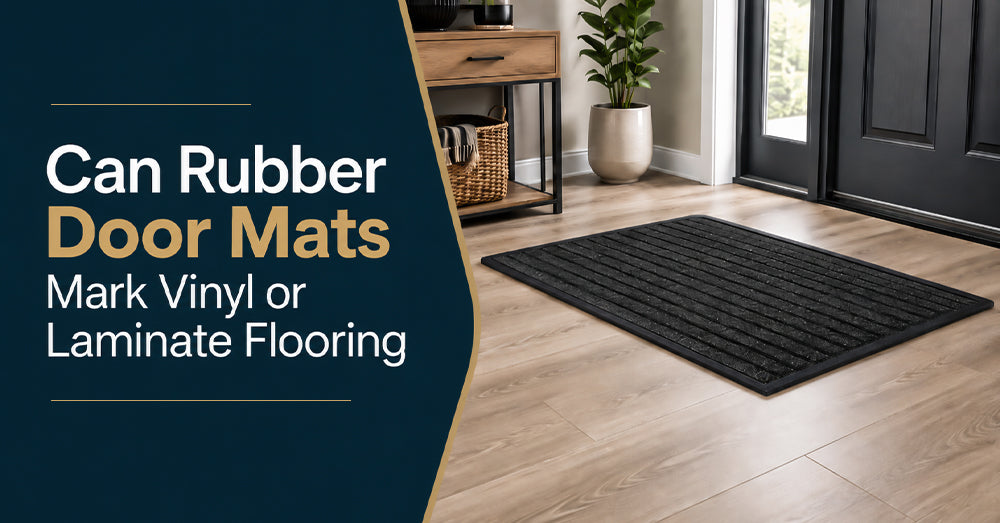
Few things are more frustrating than lifting a doormat and discovering dark marks or yellow stains on your vinyl or laminate flooring. While rubber-backed mats are excellent for trapping dirt and staying in place, they aren’t always suitable for every type of floor.
Some rubber mats can react with flooring over time, especially when exposed to heat, moisture, or prolonged contact. The good news is that not all rubber mats cause problems. Choosing a floor-safe mat and using it correctly can help protect your flooring and prevent permanent stains.
Yes, some rubber door mats can mark vinyl flooring and, in some cases, laminate flooring. Rather than scratching the surface, certain rubber compounds can react with the floor, causing stains or discolouration. The risk increases with heat, moisture, and leaving the mat in the same place for long periods. Choosing a non-staining, floor-safe mat and lifting it regularly can help prevent damage.
Why Can Rubber Door Mats Leave Marks?

Many people assume the dark marks under a mat are simply trapped dirt, but that’s often not the case. The real issue is usually a chemical reaction.
Traditional rubber contains plasticisers, processing oils and other additives that can slowly migrate onto the floor. Vinyl flooring is especially vulnerable because it also contains plasticisers to keep it flexible. When these materials remain in contact for extended periods, particularly in warm or damp conditions, they can react, causing permanent discolouration—a process often referred to as plasticiser migration.
Common signs include:
- Black outlines matching the shape of the mat
- Yellow or brown stains
- Sticky patches
- Dull areas
- Uneven colour fading
Many homeowners don’t notice the problem until they move the mat during a deep clean or while redecorating.
Does Every Rubber Mat Cause Problems?
No. One of the biggest myths is that every rubber-backed mat will damage your floor.
Many modern indoor mats are made with non-staining rubber, thermoplastic rubber (TPR), or other floor-friendly backings designed for vinyl and laminate flooring. Whether damage occurs depends on several factors.
|
Factor |
Higher Risk |
Lower Risk |
|
Rubber quality |
Cheap recycled rubber |
Premium non-staining rubber |
|
Flooring |
Vinyl |
Sealed laminate |
|
Moisture |
Damp entrance |
Dry hallway |
|
Heat |
Sunny entrance or underfloor heating |
Cooler areas |
|
Cleaning |
Mat never moved |
Mat cleaned regularly |
|
Time |
Left for months |
Lifted every few weeks |
Even a good-quality mat can cause issues if moisture becomes trapped underneath for a long time, while some lower-cost mats may never create problems in cool, dry environments.
Why Vinyl Flooring Is More at Risk
Luxury Vinyl Tile (LVT), sheet vinyl and cushion flooring are popular throughout the UK because they’re comfortable, waterproof and easy to look after. However, these same properties make them more susceptible to chemical staining.
Unlike ceramic tiles or stone, vinyl is made from flexible polymers that can react with certain rubber compounds. The likelihood of staining increases if:
- The hallway receives direct sunlight.
- Underfloor heating warms the floor.
- Rainwater stays trapped beneath the mat.
- The mat isn’t moved for months.
- Heavy furniture restricts airflow.
Even if the floor appears dry, moisture trapped beneath it can accelerate the reaction.
Can Rubber Mats Damage Laminate Flooring?
Laminate flooring is generally more resistant than vinyl because it has a protective wear layer. Chemical staining is less common, but rubber-backed mats can still cause problems.
Moisture Damage
Rubber creates a tight seal against the floor. After rainy days, water from shoes can become trapped beneath the mat rather than evaporate. Over time, this may lead to:
- Swollen edges
- Raised joints
- Bubbling
- Warping
- Damaged protective coating
Often, what looks like staining is actually moisture damage.
Dirt and Grit
Small stones and grit can collect beneath entrance mats. As people walk across them, these particles rub against the laminate surface, gradually dulling or scratching the finish. The rubber isn’t directly causing the damage; it’s the trapped debris underneath.
Early Warning Signs to Watch For
Checking beneath your mat every few weeks can help prevent permanent damage.
Look out for:
- Faint outlines around the mat
- Yellowing
- Sticky patches
- Uneven colouring
- Dark areas that remain after cleaning
- Musty smells
- Dull patches on laminate
If you notice any of these signs, remove the mat immediately, allow the floor to dry and inspect both the flooring and the underside of the mat. Early action can stop temporary discolouration from becoming permanent.
Indoor vs Outdoor Rubber Mats

This is where many homeowners make an expensive mistake.
Outdoor rubber mats are designed for rain, mud and freezing temperatures. They prioritise durability rather than compatibility with decorative indoor flooring. Many use dense recycled rubber, which is ideal for patios or stone doorsteps but not always suitable for vinyl flooring.
Indoor entrance mats, by contrast, are typically made with floor-safe backings intended for prolonged contact with finished flooring. If you’re placing a mat inside your home, always choose one that’s specifically recommended for indoor use.
Which Rubber Backings Are Safest?

The backing material makes a significant difference.
|
Backing Material |
Vinyl |
Laminate |
Notes |
|
Natural Rubber |
Usually safe |
Yes |
Check manufacturer guidance. |
|
Recycled Rubber |
Higher risk |
Moderate risk |
More likely to contain mixed compounds. |
|
TPR |
Safer |
Yes |
Common in premium indoor mats. |
|
PVC |
Generally safe |
Yes |
Lightweight and practical. |
|
Latex |
Usually safe |
Yes |
Often used on washable mats. |
|
Felt/Fabric |
Excellent |
Excellent |
Best for delicate floors where extra grip isn’t essential. |
If you’ve recently installed vinyl flooring, it’s also worth checking the manufacturer’s warranty, as some manufacturers advise against recycled rubber-backed products.
Why Do Some Mats Leave Black Marks While Others Cause Yellow Stains?
The colour of the stain often gives you a clue about what’s happening beneath the mat.
Black Marks
Black stains are usually linked to:
- Carbon black used during rubber manufacturing
- Chemical migration from the rubber
- Rubber oils mixing with dirt
- Long-term pressure in one spot
These marks often match the exact shape of the mat.
Yellow Stains
Yellowing is more common on light-coloured vinyl flooring and usually develops gradually. Common causes include:
- Plasticiser migration
- Heat exposure
- Oxidation
- UV rays reacting with rubber compounds
Unlike surface dirt, these stains often become noticeable only after the mat has been in place for several months.
Can Rubber Stains Be Removed?

Whether a stain can be removed depends on what caused it.
Surface Marks
If the mark is only on the surface, try cleaning it with:
- Warm water
- A pH-neutral floor cleaner
- A soft microfibre cloth
Clean gently without scrubbing, as abrasive cleaning can damage the floor’s protective finish.
Permanent Chemical Stains
If the rubber has chemically reacted with the flooring, cleaning products are unlikely to help. Unfortunately, this type of staining is often permanent because the flooring itself has changed colour rather than simply becoming dirty.
Avoid using:
- Bleach
- Acetone
- White spirit
- Nail polish remover
- Steam cleaners
- Abrasive pads or wire brushes
For laminate flooring that has swollen due to trapped moisture, replacing damaged boards may be the only long-term solution.
How to Prevent Rubber Mats from Marking Your Floor
Fortunately, preventing damage is simple if you follow a few good habits.
Choose a Floor-Safe Mat
Look for labels such as:
- Non-staining backing
- Suitable for vinyl flooring
- Suitable for laminate flooring
- Suitable for LVT
- TPR backing
If this information isn’t provided, check with the retailer before buying.
Lift the Mat Regularly
Every few weeks:
- Lift the mat.
- Vacuum underneath.
- Allow the floor to dry.
- Check for moisture or discolouration.
This small routine can prevent permanent damage.
Keep the Entrance Dry
British weather means wet shoes are unavoidable, especially during autumn and winter. Shake out soaked mats, wipe away standing water and improve ventilation where possible.
Move the Mat Occasionally
Even floor-safe mats shouldn’t remain in the same place forever. Repositioning them slightly every few weeks allows the floor to breathe and makes early signs of staining easier to spot.
Avoid Excessive Heat
If your hallway has underfloor heating, direct sunlight or a conservatory-style entrance, lift the mat more regularly, as heat can speed up chemical reactions.
Are Expensive Rubber Mats Better?
Not always.
Price doesn’t guarantee compatibility with your flooring. Instead, look for:
- Non-staining backing
- Indoor use certification
- Good customer reviews
- Manufacturer guidance
- Flooring warranty recommendations
A reasonably priced indoor mat with a floor-safe backing is often a better choice than an expensive outdoor rubber mat designed for patios or garages.
The Best Alternatives to Rubber-Backed Mats
If you’re concerned about staining, there are several excellent alternatives.
|
Mat Type |
Why It’s a Good Choice |
|
Cotton |
Soft, absorbent and machine washable |
|
Microfibre |
Excellent at trapping moisture and dries quickly |
|
Polypropylene |
Durable and available with floor-safe backing |
|
Washable Indoor Mats |
Easy to clean and often feature latex or TPR backing |
These options provide effective dirt and moisture control while reducing the risk of damaging delicate flooring.
Choosing the Best Door Mat
For Vinyl Flooring
Choose mats that are specifically described as suitable for:
- Luxury Vinyl Tile (LVT)
- Sheet vinyl
- Vinyl plank flooring
- Cushion vinyl
Look for TPR, latex, or non-staining backings, and avoid using heavy-duty outdoor rubber mats indoors.
For Laminate Flooring
Prioritise absorbency over grip alone. A good laminate-friendly mat should:
- Absorb rainwater quickly
- Dry efficiently
- Reduce moisture build-up
- Be easy to lift for cleaning
The right mat protects your flooring by preventing water from reaching the joints.
For entrances where a rubber mat is suitable for the flooring, our rubber non-slip entrance mat provides a practical option for helping trap dirt at the doorway. Always check your flooring manufacturer's guidance before using any rubber-backed mat.
Use a Two-Mat System
One of the simplest ways to protect your flooring is by using two entrance mats.
- Outside: A scraper mat removes mud, gravel, and larger debris before you enter.
- Inside: A soft absorbent mat captures any remaining moisture using a floor-safe backing.
This combination keeps more dirt out of your home while reducing wear on your indoor flooring.
Seasonal Tips for UK Homes
Each season presents different challenges.
- Autumn: Wet leaves and mud increase moisture, so check beneath your mat regularly.
- Winter: Road salt, grit and snow can damage flooring if left too long. Clean entrance areas more frequently.
- Spring: Wash your mat and inspect the floor for early signs of staining or trapped moisture.
- Summer: Strong sunlight and higher temperatures can increase the risk of chemical reactions, so move mats occasionally in sunny hallways.
Common Mistakes to Avoid
Avoid these common errors:
- Leaving the mat in one place for months.
- Ignoring dampness underneath.
- Buying the cheapest mat without checking the backing.
- Forgetting to vacuum beneath the mat.
- Using outdoor rubber mats inside the home.
Simple maintenance often prevents expensive flooring repairs.
Quick Buying Checklist
Before buying a new entrance mat, ask yourself:
✔ Is it suitable for indoor use?
✔ Is it recommended for vinyl or laminate flooring?
✔ Does it use a non-staining TPR or latex backing?
✔ Will it absorb moisture effectively?
✔ Is it easy to lift and clean?
✔ Is it suitable for your level of foot traffic?
Answering “yes” to these questions will help you choose a mat that’s practical and safe for your flooring.
FAQs
Can a rubber-backed mat permanently stain vinyl flooring?
Yes. Certain rubber compounds can react with vinyl, causing permanent discolouration if left in place for long periods.
Are all rubber-backed mats unsafe?
No. Many modern mats use non-staining rubber or TPR backings specifically designed for vinyl and laminate floors.
Can rubber mats damage laminate flooring?
They can trap moisture beneath the mat, which may cause swelling or damage to laminate joints over time.
How often should I lift my entrance mat?
Every two to four weeks, or weekly during wet winter weather.
Is a rubber mat better than a coir mat?
Rubber mats are excellent outdoors, while coir and absorbent indoor mats are often better choices indoors.
Does underfloor heating increase the risk?
Yes. Heat can accelerate chemical reactions between some rubber compounds and vinyl flooring.
Final Thoughts
Rubber doormats are an excellent way to keep dirt and moisture out of your home, but choosing the right one matters. While some rubber-backed mats can stain vinyl flooring or contribute to moisture problems on laminate, these issues are largely avoidable.
Choose a floor-safe mat with a non-staining backing, keep the entrance dry, and lift the mat regularly for cleaning. These simple habits will help protect your flooring and extend its lifespan.
At RugsPile floor mats, you’ll find a wide range of stylish entrance mats designed for modern homes. Whether you’re looking for a practical indoor mat or a durable outdoor option, selecting the right design for your flooring will keep your entrance looking clean while protecting the investment you’ve made in your home.