





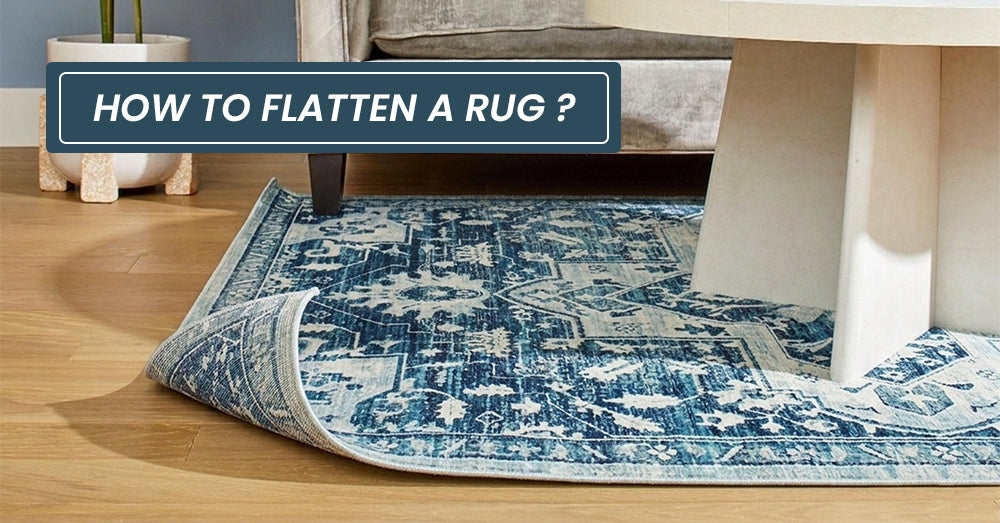
Rugs often arrive rolled or folded during delivery. When placed on the floor for the first time, they may show creases, waves, bumps, or curling corners.
A rug that does not lie flat can look uneven and may become a trip hazard, especially in busy areas of the home.
Many rugs delivered to homes across the UK are tightly rolled during shipping, which can cause temporary creases when first placed on the floor.
The good news is that most rugs flatten easily with simple methods. This guide explains practical ways to help a rug lie flat, including natural settling, rolling techniques, gentle heat, and simple tools that keep edges in place.
How to Flatten a Rug
To flatten a rug, roll it in the opposite direction, place heavy objects on curled corners, or apply gentle heat using a hair dryer or steamer. Most rugs flatten naturally within 24–72 hours once the fibres relax. A non-slip rug pad or carpet tape can also help keep the rug flat.
Preparing a Rug After Unboxing

New rugs are often tightly packed for transport. Because of this, the fibres may hold the shape of the roll or fold.
After unpacking:
- Lay the rug flat in the room where it will be used
- Smooth the surface gently with your hands
- Allow the rug to adjust to the room temperature
Small waves often disappear once the fibres relax.
Before You Begin Flattening Your Rug
Before trying other techniques:
- Check the rug material
- Ensure the floor is clean and dry
- Avoid placing heavy furniture immediately
Sometimes simply spreading the rug out and waiting a day is enough.
Why Rugs Do Not Lay Flat or Develop Creases
Rugs may develop ripples or curled corners for several reasons.
Common causes include:
- Tight packaging during delivery
- Folding during storage
- Pressure from furniture
- Moisture after washing
- Uneven floors
When a rug stays rolled for a long time, the fibres develop shape memory, which makes the edges curl.
Identifying the Problem With Your Rug
Different issues require different solutions.
Common rug problems include:
- Curling corners
- Waves or ripples
- Fold creases
- Bumps or bulges
Once the problem is clear, it becomes easier to choose the right method.
Ways to Flatten a Rug

Several techniques can help a rug lie flat more quickly.
Common solutions include:
- Letting the rug rest naturally
- Reverse rolling
- Placing weight on corners
- Using gentle heat
- Securing the rug with pads or tape
- Using ice cubes to remove dents
Many rugs flatten within one to two days.
Method 1: Let the Rug Rest Naturally
Allow the Rug to Relax
Lay the rug flat and allow the fibres to settle. This method works well for minor creases caused by packaging.
Flip the Rug Over
Turning the rug upside down allows gravity to help flatten raised edges.
Will a Rug Flatten on Its Own?
Yes. Many rugs flatten naturally once the fibres adjust to the room environment.
How Long Does It Take?
Most rugs flatten within one to three days, depending on thickness and material.
Method 2: Reverse Rolling the Rug
Reverse rolling helps reset the shape of the fibres.
Step-by-step:
- Lay the rug flat on the floor.
- Roll the rug tightly in the opposite direction of the curl.
- Leave it rolled for 6–12 hours.
- Unroll the rug and smooth the surface with your hands.
This method works especially well for new rugs or shipping creases.
Method 3: Weighted Flattening
Applying weight can gradually relax curled corners.
Step-by-step:
- Lay the rug flat where it will be used.
- Place heavy items such as books or boxes on the curled corners.
- Leave the weight in place for 24–48 hours.
- Remove the items and check if the rug has relaxed.
Furniture can also help hold edges flat.
Method 4: Using Heat to Relax Rug Fibres
Heat softens fibres and allows them to return to shape.
- Hair Dryer: Apply warm air from several inches away while smoothing the corner.
- Steam: Steam can help loosen stubborn creases.
- Clothes Iron: Use low heat with a cloth barrier between the iron and rug.
- Sunlight: Natural warmth can help reduce wrinkles when the rug is placed in sunlight.
Method 5: Ice Cube Method for Corners and Dents

Ice can help restore compressed fibres.
Steps:
- Place ice cubes on the dent or curled corner.
- Let the ice melt naturally.
- Allow the area to dry.
- Place weight on the area if needed.
This method works well for furniture dents.
Method 6: Securing the Rug to the Floor
Sometimes the best solution is simply keeping the rug firmly in place.
- Double-Sided Carpet Tape: Carpet tape holds rug edges flat against the floor.
- Corner Grippers: Corner grips stop edges from lifting.
- Non-Slip Rug Pads: Rug pads provide grip and prevent movement.
Flattening a Rug That Has Been Folded
Folded rugs often develop deeper creases than rolled rugs.
Helpful methods include:
- Reverse rolling
- Gentle heat
- Weighted flattening
These techniques help relax the fibres and restore shape.
How to Get Rid of Rug Fold Marks Quickly

Rugs that have been folded during storage or delivery can sometimes develop visible creases and fold marks. In most cases, these marks fade as the rug settles, but you can speed up the process by reversing the rug's rolling or by placing weight on the affected areas. For deeper creases, gentle heat may help relax the fibres and restore a flatter appearance.
Flattening Rugs After Cleaning or Washing
Rugs may wrinkle after washing.
To reduce wrinkles:
- Lay the rug flat while drying
- Ensure the rug dries evenly
- Avoid twisting or excessive heat
This helps prevent fibre damage.
Fixing Common Rug Problems
- Removing Waves: Rolling, weight, or gentle heat can smooth waves.
- Fixing Curling Corners: Corner grips, rug pads, or carpet tape help keep edges flat.
- Removing Furniture Dents: Ice cubes or brushing the fibres can restore the pile.
- Fixing Ripples or Bumps: Gently stretch the rug and secure it.
Flattening Rugs on Different Floors
- Hardwood Floors: Use rug pads or carpet tape to improve stability.
- Carpeted Floors: Corner grips or furniture weight help hold the rug flat.
- Uneven Floors: Extra padding underneath can help level the rug.
Flattening Different Rug Types
New Rugs: Most new rugs flatten naturally once fibres relax.

Outdoor Rugs: Sunlight and weight can help flatten outdoor rugs.

- Natural Fibre Rugs: Gentle methods work best for natural fibres.
- Runner Rugs: Reverse rolling and rug pads work well for runners.
Tools and Materials That Can Help
|
Tool |
Purpose |
|
Hair dryer |
Heat method |
|
Clothes iron |
Remove creases |
|
Heavy objects |
Weighted flattening |
|
Steamer |
Relax fibres |
|
Rug pad |
Prevent slipping |
|
Carpet tape |
Secure edges |
Choosing the Right Rug to Prevent Curling
Rugs with strong backing and quality materials are less likely to develop curling corners or deep creases.
Choosing a well-made rug can help it stay flat and stable on the floor.
Vacuuming to Help Flatten a Rug
Vacuuming can help fibres settle.
Tips include:
- Vacuum in the direction of the pile
- Avoid beater bars
- A gentle vibration may reduce small ripples
Stretching a Rug to Remove Ripples
- Gentle Stretching: Lightly pull the edges to smooth waves.
- Professional Stretching: Large rugs may require specialised stretching tools.
When to Call a Professional
Professional help may be needed when:
- Ripples are severe
- Fibres appear warped
- The rug is valuable or handmade
Professionals may use steam or stretching equipment.
Preventing Rug Creases and Curling
To keep rugs flat in the future:
- Avoid folding during storage
- Roll rugs loosely
- Use a rug pad underneath
- Rotate rugs occasionally
These habits help maintain a smooth surface.
Safety Considerations
Rugs that curl or ripple can create trip hazards.
Improve safety by:
- Flattening corners quickly
- Securing edges
- Using rug pads
FAQs
What is the fastest way to flatten a rug?
Reverse rolling combined with weighted flattening usually works quickly.
Can you steam a rug to flatten it?
Steam can relax fibres when used carefully.
Will a rug flatten on its own?
Many rugs flatten naturally after a few days.
How do you stop rug corners from curling?
Use rug pads, carpet tape, or corner grips.
Can you iron a rug?
Yes, with low heat and a cloth barrier.
How long does it take for a rug to flatten?
Usually one to three days, depending on thickness.
How do you flatten a rug on carpet?
Use a rug pad or corner grips. Furniture along the edges can also help hold the rug flat.
Why does my rug keep curling up?
Curling may happen because fibres remember their rolled shape, or the rug lacks support underneath.
Final Thoughts
Most rugs flatten naturally with time. Simple methods such as reverse rolling, weight, gentle heat, or rug pads can speed up the process.
Flattening your rug properly helps it:
- look smooth
- stay safe
- last longer